
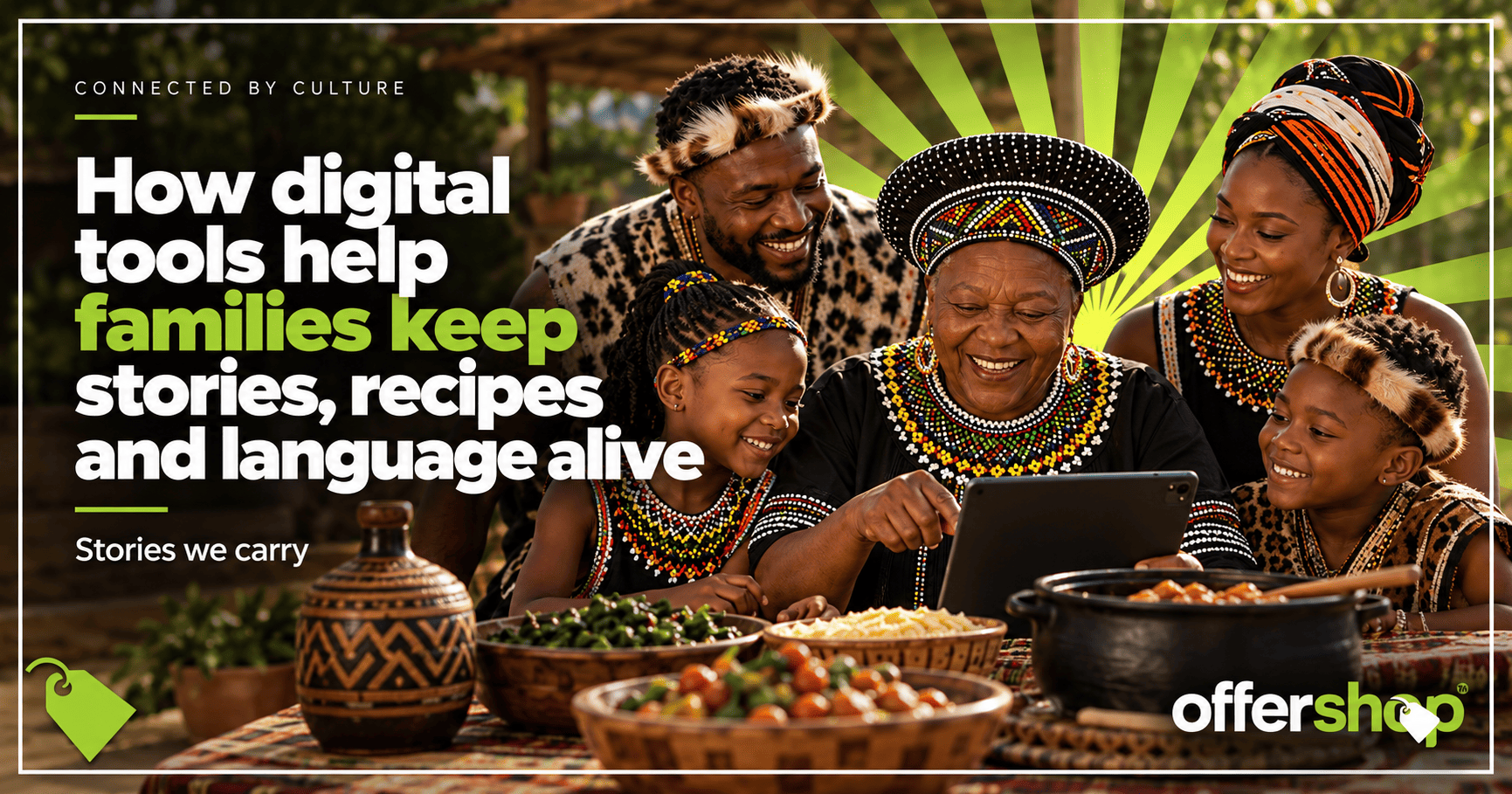
Preserve family stories, traditions, and memories by starting with the everyday details that make your family’s heritage unique. Heritage does not only live in museums, archives, or formal family trees. It can be found in the recipe a grandparent knows by heart, the saying everyone in the family understands, the photograph with a story nobody has written down, or the way a name is pronounced in your home language.
These details can be easy to lose precisely because they are such a familiar part of everyday life. Preserving them does not require a complicated system or specialist equipment. The phone, tablet or laptop already in your home can become a simple way to record recipes, voices, photographs and stories that future generations can return to.
If your family already uses a smartphone to capture these moments, an option such as the Samsung Galaxy S24 256GB provides a relevant example of a device with the camera and storage needed to keep those memories together.
Preserve Family Memories by Starting with One Meaningful Thing
Trying to document an entire family history in one weekend is a quick way to make the project feel impossible. Start smaller. Choose one recipe, one person, one photograph, or one phrase that matters to your family and build from there.
Ask an older relative to tell the story behind a family dish.
Record how a family name, place, or phrase is pronounced.
Photograph a handwritten recipe before the paper fades or disappears.
Add the names, date, and story behind an old family photograph.
Capture a short voice note about a memory that gets retold at gatherings.
Starting with these small details is one of the easiest ways to preserve family memories without making the process feel like a major project.
Preserve Family Recipes and the Stories Behind Them
A family recipe is often more than measurements and cooking time. It can carry a place, a person, and a routine. When you document one, capture the practical steps as well as the story around it. For recipe photos and short family videos, the live Samsung Galaxy A54 5G 256GB is another onsite example with a 50MP main camera and 256GB storage.
- Write down the ingredients and approximate quantities.
- Photograph the important stages of the preparation.
- Record the small details that are normally explained verbally, such as texture, colour or when to lower the heat.
- Add who usually makes the dish and when your family serves it.
- Save the final version with a clear file name that other family members will recognise.
If the person sharing the recipe is comfortable being recorded, a short video can be even more useful than a written version because it captures voice, movement and the small habits that are difficult to describe on a page.
Use Voice Notes to Preserve Family Language and Pronunciation
Home languages carry meaning that can be flattened when everything is translated into English. A simple voice-note folder can preserve how words, praise names, greetings, idioms and family expressions actually sound. Where voice, photographs and video all need to live on the same device, the Apple iPhone 15 128GB gives a current Offershop example of a phone with a 48MP main camera and 128GB storage.
Keep each recording focused. Say the word or phrase first, then explain what it means, when it is used, and who taught it to you. If different generations pronounce or use a phrase differently, keep both versions. The variation is part of the story.
Give old photographs the context they deserve
A photograph without names, dates or context becomes harder to understand with every generation. When you digitise or photograph an older picture, add the information people will need later. If the family is digitising older photographs as well as recording new ones, the Samsung Galaxy S24 256GB is a useful live reference for the campaign’s ‘moments worth keeping’ stream.
Who is in the photograph?
Where was it taken?
Roughly when was it taken?
What was happening that day?
Why does the picture matter to your family?
Even a short note saved alongside the image can turn an anonymous photograph into a useful family record and help preserve family history for people who may not know the story firsthand.
Keep the files organised enough to be found again
Saving something is only useful if someone can find it later. Use simple folder names and a consistent structure instead of leaving everything mixed into a camera roll or downloads folder. For larger folders of photographs, recordings and scanned documents, the Mecer MyLife Z140 + 128GB portable SSD is a current onsite laptop-and-storage option.
| Folder | Example |
|---|---|
| Family Recipes | Umngqusho – Gogo Nomsa – 2026 |
| Voice Notes | IsiXhosa sayings – Tata – September 2026 |
| Family Photos | Mahobe family – East London – 1998 |
| Stories | How we moved to Cape Town – voice recording |
Back up what matters
A single phone should not be the only place where an important family archive lives. Where possible, keep a second copy on another device, an external drive or a family cloud folder that more than one trusted person can access.
The aim is not to create a perfect archive. It is to reduce the chance that a lost phone, damaged laptop or forgotten password takes the only copy of a meaningful story with it. A larger work-and-storage setup such as the HP 15 i7 512GB + Huawei E5783 XXXL deal can suit households that want substantial laptop storage together with a mobile Wi-Fi router.
Ask before you record or share
Not every family story is meant for a public audience. Before recording someone, ask if they are comfortable with it. Before posting a family photograph, recipe or voice clip online, check whether the people involved are happy for it to be shared.
Preserving a story and publishing a story are two different decisions. Families should be able to keep meaningful records privately without feeling pressure to turn them into social content. If two people in a household both need a phone for everyday photos, messages, and family records, the Huawei nova Y63 x 2 deal is a live two-device example with 128GB storage and a 50MP main camera on each handset.
Make the archive something the family will actually use
The best family archive is not the most sophisticated one. It is the one people can understand, add to, and pass on. Share copies with siblings or cousins. Invite younger family members to interview older relatives. Add new photographs and recipes as they happen instead of waiting for a special occasion.
Heritage is carried forward when people can access it. A few organised recordings, photographs and recipes can become a living record of the people, language and everyday moments that shaped your family. When the archive becomes part of everyday family life, a complementary-device option such as the iPhone 16e + iPad Air 11-inch M4 bundle shows how one offer can combine a phone with a larger screen for viewing and organising family material.
Keep the stories close
You do not need specialist equipment or a formal archive to preserve family stories for the next generation. If your family is already using smartphones, tablets or laptops to capture everyday life, start with what you have and build the habit before you think about buying anything new.
A photograph with names attached, a recording of a familiar voice, a recipe written down properly or a phrase spoken in your home language can become more valuable with time. Small efforts made today can help preserve family heritage and give future generations something meaningful to return to.
When a device no longer fits what you need, you can explore current Offershop deals and compare smartphone, laptop, tablet and internet options that work for your household. If you decide that the current device no longer fits the job, use a specific live product page such as the Samsung Galaxy A54 5G 256GB deal to compare the actual contract terms before applying.