
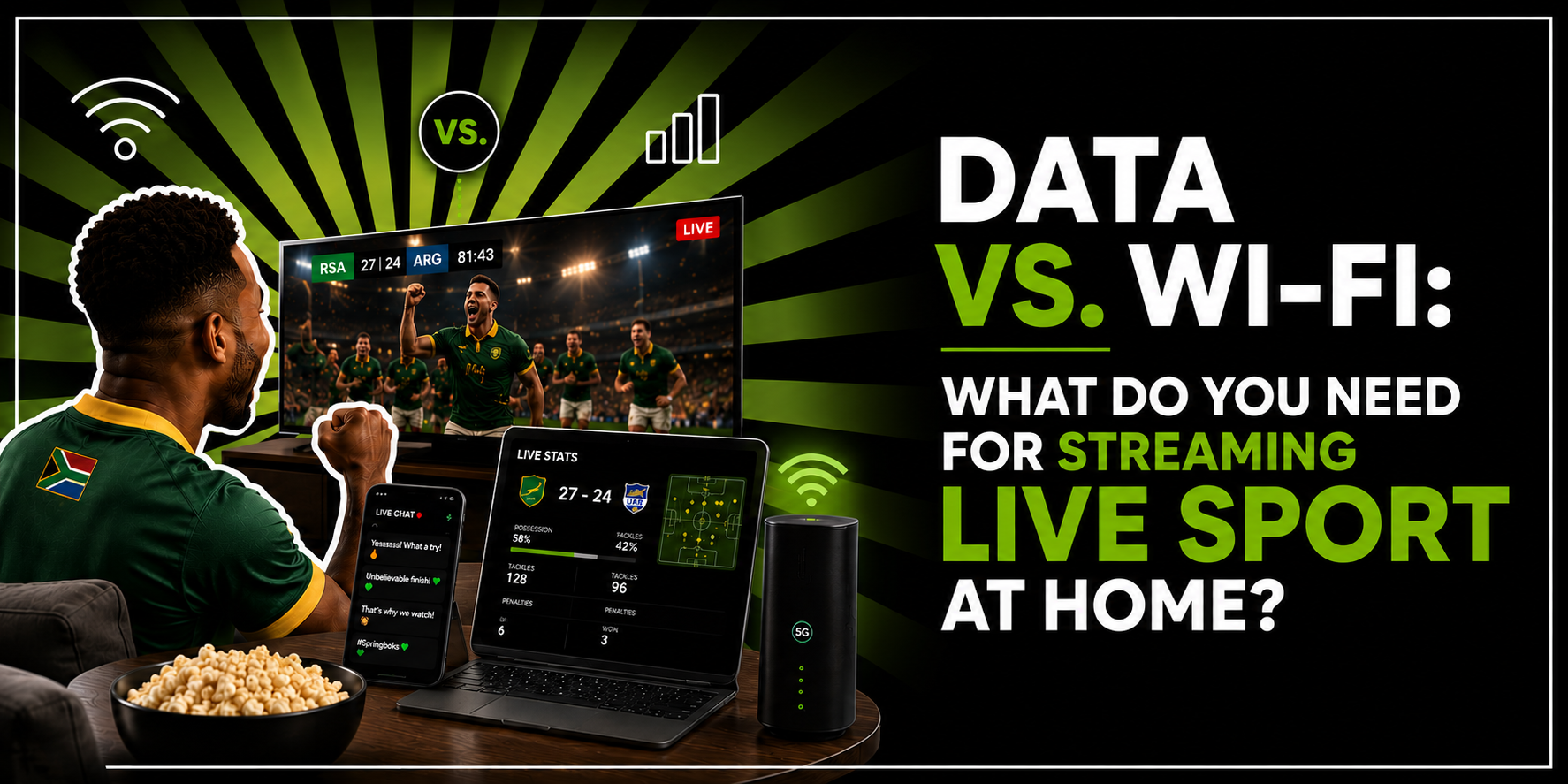
When it comes to streaming live sport, a second-rate connection is the ultimate unforced error. But if you are setting up your ultimate home viewing stadium, which connection type should you rely on? Is it better to burn through mobile data, or should you invest in a dedicated home Wi-Fi setup? Let’s break down the mechanics of a seamless stream so you never miss a crucial play again.
There is nothing quite like the tension of a live sporting event. The clock is ticking down, your team is on the attack, the commentators are losing their minds, and then… the dreaded buffering wheel of death appears. By the time your screen catches up, you’ve missed the match-winning goal, try, or wicket, and your group chat has already spoiled the result.
Why Streaming Live Sport Demands More From Your Internet Connection
If you can stream movies on Netflix without a hitch, you might assume that streaming live sport will be a breeze. Unfortunately, live broadcasts are an entirely different beast.
When you watch a pre-recorded show, your device “buffers” or pre-loads the video minutes in advance. If your connection dips for a few seconds, you don’t notice. Live sport, however, happens in real-time. Your device has to process a massive, constant influx of data with zero room for delay.
The Resolution and Frame Rate Factor
Sports broadcast feeds require higher frame rates (typically 60 frames per second compared to a movie’s 24fps) to keep fast-moving balls and players from looking like blurry ghosts. Combine high frame rates with 4K or HD resolution, and your internet connection needs to be both fast and incredibly stable.
The Mobile Data Route: Speed on the Move for Streaming Live Sport
Using cellular data (4G or 5G) via a SIM card or mobile hotspot is highly convenient, but is it the right choice for a full 90-minute match at home?
The Pros
Blazing Speeds: Modern 5G and even LTE connections can easily outpace older fixed-line broadband options.
No Infrastructure Needed: You don’t need a technician to drill holes in your wall; you just pop in a SIM and play.
The Cons
The Data Burn: A single high-definition sports match can easily guzzle anywhere from 2GB to 5GB of data. If you’re settling in for a weekend tournament, a standard mobile plan will be depleted by halftime.
Signal Fluctuations: Mobile data towers handle traffic from everyone in your neighborhood. If everyone nearby tunes into the same match, tower congestion can cause your speeds to plummet.
The Verdict on Mobile Data: Great as a backup or for watching a game on your phone while away from home, but potentially expensive and unstable as a permanent home sports streaming solution unless you have a massive, dedicated data pool.
The Wi-Fi Route: Fixed Wireless and Fibre Stability for Streaming Live Sport
When we talk about “Wi-Fi” for home streaming, we are usually talking about a fixed line (like Fibre) or Fixed Wireless Access (FWA/5G Home Internet) broadcast via a router.
The Pros
Generous (or Unlimited) Allocations: Home internet packages are designed for high-volume consumption, meaning you can watch the pre-game analysis, the match, and the post-game drama without counting megabytes.
Device Sharing: A robust home router handles your TV, your phone, and your laptop simultaneously without dropping the stream.
The Cons
Hardware Dependent: You are tied to the range of your router. If your TV is on the opposite side of the house from your router, you might need extenders to maintain top speeds.
How to Choose the Right Game Plan for Streaming Live Sport at Home
Choosing between mobile data and home Wi-Fi comes down to how frequently you watch and how many devices are connected in your household.
Go with Mobile Data if: You only watch the occasional big game, live alone, and already have access to a heavy-duty data package that won’t penalize your wallet for high-gigabyte usage.
Go with Home Wi-Fi if: You have a multi-person household, prefer watching on a large smart TV in crisp 4K, and regularly host match-day viewings where a dropped connection is simply not an option.
Upgrade Your Connection: Best Deals for Streaming Live Sport
If your current setup is giving you more lag than highlights, it is time to upgrade your digital stadium. You don’t need to spend a fortune to secure a lag-free experience. Depending on your viewing habits, here are the top options to keep you in the game:
For the Flex-Viewer (High-Volume Mobile Data)
If you prefer the flexibility of cellular data but hate the premium price tag, a massive data cap is essential. You can secure peace of mind with this SIM-only 100GB + 100GB Data Top-Up deal for R299pm, giving you more than enough bandwidth to survive a packed sporting calendar.
For the Budget-Conscious Streamer (Affordable Home 5G)
Want the speed of 5G without a long-term commitment? Take a look at the MTN Home Internet Starter Month-to-Month Promo for R339pm, which includes a 5G router to get your living room connected instantly. If you are comfortable locking in a great rate, you can also opt for the MTN Home Internet Starter 5G Promo Contract to lock down reliable home connectivity.
For the Ultimate Sports Fanatic (Max-Speed Pro 5G)
If you refuse to compromise on quality and want to stream multiple games in Ultra HD while the rest of the house browses the web, you need maximum horsepower. Ensure a buffer-free season by upgrading to the premium MTN Home Internet Pro 5G Package for R399pm, complete with an included high-performance 5G router.
Ready to Bench the Buffering Wheel?
Don’t let a weak connection ruin the next big rivalry. Whether you need a massive data injection for your mobile device or a lightning-fast 5G router to anchor your living room, the right setup makes all the difference when streaming live sport.
Next Step: Head over to OfferShop.co.za to browse the latest home internet connectivity deals and find the perfect package to supercharge your sports streaming today.